
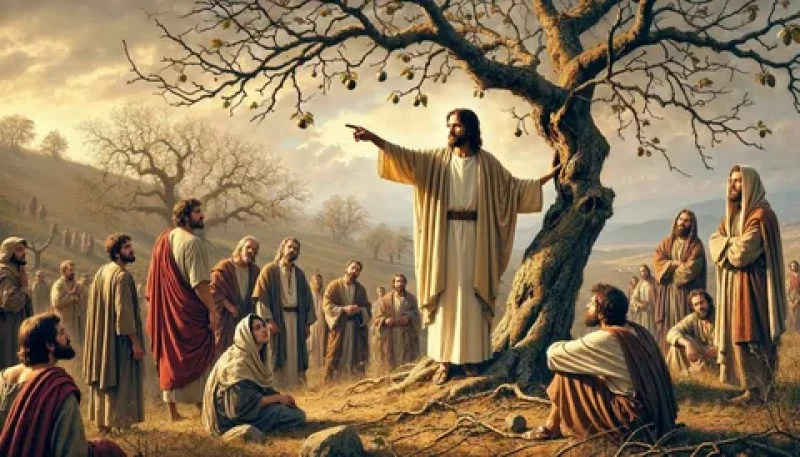
The story of Jesus cursing the fig tree is one of the most discussed passages in the New Testament. At first glance, the event seems unusual. Jesus, who showed mercy toward people and performed many acts of healing, suddenly speaks judgment over a tree that has no fruit.
This raises an important question: why did Jesus curse the fig tree? The answer is found by looking beyond the tree itself. The fig tree was not simply an example of a plant that failed to produce fruit. Jesus used it as a symbolic lesson about spiritual fruit, religious hypocrisy, and the consequences of appearing faithful without truly following God.
The event happened during Jesus’ final week before His crucifixion and was closely connected with His actions in the Jerusalem temple. Through this unusual act, Jesus revealed that God is not looking for outward appearances alone. He desires genuine faith that produces visible spiritual fruit.
Where Does the Bible Mention Jesus Cursing the Fig Tree?
The story appears in two Gospel accounts:
- Matthew 21:18–22
- Mark 11:12–14, 20–25
Both accounts take place shortly after Jesus enters Jerusalem before His death. This was a significant moment because Jesus had arrived as the promised Messiah, but He also came to confront the spiritual condition of God’s people.
In Matthew’s account, Jesus sees the fig tree while travelling from Bethany toward Jerusalem. The tree has leaves, so Jesus approaches it expecting to find figs. When He finds nothing but leaves, He declares that the tree will never bear fruit again. The disciples later see that the tree has withered.
Mark gives additional details. His account places the fig tree incident around Jesus cleansing the temple, creating a connection between the two events.
Understanding this context helps explain why did Jesus curse the fig tree and why the story carries a much deeper meaning than a simple miracle involving a tree.
Why Did Jesus Curse the Fig Tree?
Jesus cursed the fig tree because it represented something that looked fruitful but was actually empty. The tree had leaves, which created the appearance of health and productivity. However, when Jesus examined it, there was no fruit.
This was a picture of spiritual hypocrisy. Throughout His ministry, Jesus often challenged people who focused on outward religious behaviour while ignoring the condition of their hearts. The fig tree became a visual example of this problem.
A person can appear devoted through religious actions, traditions, or public reputation, but God looks deeper. He looks for genuine faith, obedience, and a life that reflects His character. The issue was not simply that the tree had no fruit. The problem was that it gave the impression that fruit should be present. The tree promised something it could not deliver.
Was Jesus Wrong to Expect Fruit From the Fig Tree?
One of the most common questions about this passage is why Jesus expected figs when Mark says, “the season for figs was not yet.”
To understand this, it is important to know how fig trees worked in ancient Israel. Fig trees could produce early figs before the main harvest season. When a fig tree developed leaves before the normal harvest period, those leaves could indicate that early fruit should also be present.
The tree in this story was unusual because it was full of leaves. The leaves suggested productivity, but closer inspection revealed that there was no fruit.
Jesus was not punishing a normal tree for following nature. He was using the tree as a symbolic message. The lesson behind why did Jesus curse the fig tree is that God rejects false appearances. A life that looks spiritually healthy but produces no fruit is not what God desires.
The Meaning of the Fig Tree in Jewish History
To fully understand this event, it is important to know how the fig tree was used symbolically in the Old Testament. God’s relationship with Israel was often described through agricultural images. Israel was compared to:
- A vineyard planted by God
- A tree that should produce fruit
- A plant receiving God’s care
The expectation was that God’s people would produce spiritual fruit through faithfulness, justice, mercy, and obedience. However, several prophets used the image of fruitlessness to describe Israel’s failure.
In Jeremiah 8:13, God describes finding no figs on the fig tree as a picture of judgment. In Hosea 9:10, Israel is compared to early figs found on a tree, showing the importance of fig imagery in understanding God’s relationship with His people. Micah 7:1 also uses the image of searching for good fruit and finding none. Because of this background, Jesus’ action would have carried a familiar message to His audience. The fig tree represented a spiritual condition that had existed for generations.
The Connection Between the Fig Tree and the Temple
One of the strongest clues to the meaning of this event is its connection with Jesus cleansing the temple. Mark presents the story in a pattern often called a “sandwich structure”:
Fig tree → Temple cleansing → Fig tree
Jesus first sees the fruitless fig tree. Then He enters the temple and finds people buying and selling instead of treating God’s house as a place of prayer. After this, the disciples discover that the fig tree has withered.
This structure shows that the two events explain each other. The fig tree represented spiritual barrenness, while the temple represented a religious system that had become focused on outward activity rather than genuine worship.
The temple looked impressive from the outside, but Jesus saw that something was missing. Like the fig tree covered with leaves, it had an appearance of life without the fruit God expected.
Jesus Cursing the Fig Tree as a Prophetic Sign
The act of cursing the fig tree was not an emotional reaction. It was a prophetic sign. In the Old Testament, prophets often used symbolic actions to communicate God’s message. Their actions served as visible illustrations of spiritual truths.
For example:
- Jeremiah used a yoke to represent coming judgment.
- Ezekiel acted out events to show what would happen to Jerusalem.
- Hosea’s marriage represented Israel’s unfaithfulness.
Jesus followed this prophetic tradition. Instead of only explaining spiritual failure with words, He demonstrated it through the fig tree. The withered tree became a picture of judgment against fruitlessness.
What Does “Fruit” Mean in the Bible?
The Bible frequently uses fruit as a symbol of the results produced by a person’s relationship with God. Spiritual fruit includes qualities such as:
- Love
- Patience
- Kindness
- Faithfulness
- Humility
- Obedience
Jesus taught that a healthy spiritual life should produce visible evidence. This does not mean people earn God’s acceptance by doing good works. Instead, genuine faith naturally produces a changed life. Just as a healthy tree produces fruit because of its nature, a person who truly follows God should show evidence of that relationship.
The Warning Against Religious Hypocrisy
Another important lesson from this story is the danger of religious appearance without spiritual reality. The religious leaders of Jesus’ time were often concerned with external rules and public recognition. However, Jesus criticised them because their actions did not match their hearts.
The fig tree reflected the same problem. It looked alive, but it was empty.
This warning applies beyond the people of Jesus’ time. Anyone can become focused on appearance:
- Knowing religious teachings without applying them
- Attending gatherings without growing spiritually
- Speaking about faith without living it
The story reminds believers that God examines the heart, not just outward actions.
What Can Christians Learn From the Fig Tree?
The story encourages believers to examine their own spiritual lives. It asks important questions:
- Is my faith producing change?
- Are my actions consistent with what I believe?
- Am I focused more on appearance than transformation?
- Am I producing spiritual fruit?
Jesus’ message was not that people must become perfect. Instead, He showed that genuine faith should continue to grow and produce results.
A tree that is alive should bear fruit. In the same way, a living relationship with God should influence how someone thinks, acts, and treats others.
Final Thoughts
So, why did Jesus curse the fig tree? He cursed it as a powerful illustration of spiritual emptiness and false appearance. The tree looked productive because it had leaves, but it had no fruit. Through this action, Jesus warned against a faith that appears genuine on the outside but lacks true devotion within.
The fig tree was also connected with Israel’s spiritual condition and the temple’s failure to reflect genuine worship. Jesus showed that God is not satisfied with religious activity alone. He looks for hearts that produce real spiritual fruit.
The message of the fig tree remains relevant today: faith is not measured only by what people show publicly. True faith is revealed through a transformed life that reflects God’s character.