
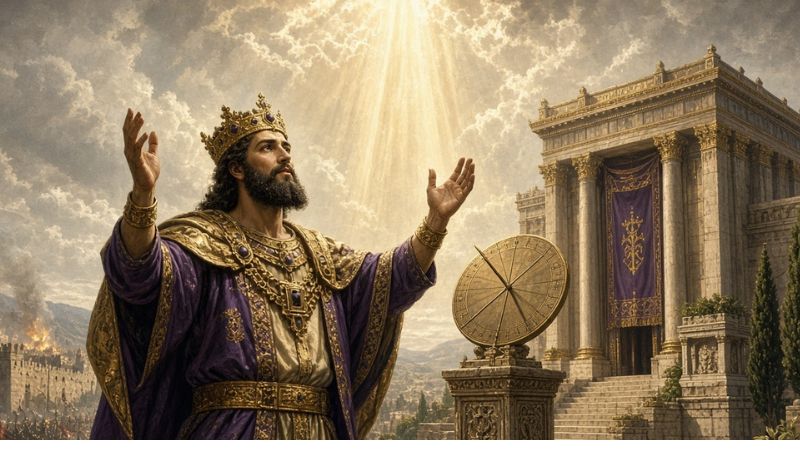
King Hezekiah was one of the most faithful kings of Judah in the Old Testament. He is remembered for trusting God, restoring temple worship, and defending Jerusalem against the Assyrian Empire. His life also included a serious illness, a miraculous recovery, and a mistake that revealed the dangers of pride. If you want to understand who was hezekiah in the bible, his story offers important lessons about faith, leadership, and humility.
Hezekiah became king when Judah faced religious problems and political pressure. Instead of following the practices of his father, King Ahaz, he introduced religious reforms and encouraged the people to return to God. His story, recorded in 2 Kings, 2 Chronicles, and Isaiah, reveals both his achievements and the challenges he faced as a leader.
Who Was Hezekiah in the Bible?
Hezekiah was the son of King Ahaz and a ruler of Judah, the southern kingdom of the Israelites. According to 2 Kings 18:2, he was 25 years old when he became king and reigned in Jerusalem for 29 years.
The Bible describes Hezekiah as a king who trusted the Lord and followed His commandments. Second Kings 18:5–6 praises his faithfulness and commitment to God. Unlike his father, who was associated with unfaithful religious practices, Hezekiah worked to restore the worship of the Lord.
The main accounts of his life appear in 2 Kings 18–20, 2 Chronicles 29–32, and Isaiah 36–39. These passages describe his religious reforms, the Assyrian invasion, his miraculous healing, and his encounter with Babylonian envoys.
What Does the Name Hezekiah Mean?
The name Hezekiah is commonly understood to mean “Yahweh strengthens” or “the Lord strengthens.” This meaning connects with his experiences, particularly when Jerusalem faced the threat of the powerful Assyrian army.
Hezekiah’s Early Life and Family Background
Hezekiah was the son of King Ahaz and Abijah, whose name is also rendered Abi in some translations. He inherited a kingdom facing religious challenges and increasing pressure from neighboring powers.
Although his father had made decisions that the biblical account criticizes, Hezekiah chose a different path. After becoming king, he removed objects associated with idolatry and encouraged the people to follow God’s commandments. His actions demonstrate how he sought to change Judah’s religious direction.
When Did Hezekiah Become King of Judah?
Hezekiah became king at the age of 25. During his reign, the Assyrian Empire expanded its control across the ancient Near East. The northern kingdom of Israel eventually fell to Assyria, as described in 2 Kings 18:9–12.
The fall of Israel demonstrated the danger facing Judah. Hezekiah had to address religious problems within his kingdom while preparing to protect Jerusalem from a powerful foreign enemy.
What Made King Hezekiah a Good King?
The Bible praises Hezekiah for trusting God, following His commandments, and removing practices he considered unfaithful. Second Kings 18:3–6 compares his conduct favorably with that of David, an earlier king known for his devotion to God.
Hezekiah’s faith influenced his decisions as a ruler. He restored temple worship, encouraged religious celebrations, and sought God’s help when Assyria threatened Jerusalem. However, the Bible also records his mistakes, particularly his decision to show his wealth to Babylonian envoys. His story therefore presents a faithful leader who was not without weaknesses.
Hezekiah’s Faith and Trust in God
Hezekiah’s trust in God became especially important during the Assyrian crisis. Although Jerusalem faced a serious threat, he prayed and sought guidance from the prophet Isaiah.
His example shows that faith does not mean avoiding every difficulty. Instead, it involves seeking guidance and remaining committed to one’s beliefs while taking practical steps to address problems.
Hezekiah’s Religious Reforms and Restoration of Worship
One of Hezekiah’s first priorities was restoring the worship of God in Judah. According to 2 Chronicles 29–30, he repaired and cleansed the temple, involved priests and Levites in religious services, and encouraged the people to renew their commitment to God.
Hezekiah Removes Idolatrous Objects
Second Kings 18:4 states that Hezekiah removed high places, broke sacred pillars, cut down Asherah poles, and destroyed the bronze serpent made by Moses. Although the serpent had originally been associated with an event in Numbers 21:4–9, people had begun burning incense to it.
Hezekiah destroyed the object because it had become associated with improper worship. His actions demonstrated his determination to remove practices that he believed had led the people away from God.
Hezekiah Restores Temple Worship and Passover
Hezekiah ordered repairs to the temple and called on priests and Levites to cleanse it. The restoration involved removing unclean objects, offering sacrifices, and bringing religious services back into regular practice.
He also encouraged the celebration of Passover, which commemorated God’s deliverance of the Israelites from slavery in Egypt. According to 2 Chronicles 30, invitations were sent to people in Judah and communities associated with the northern tribes. Although some rejected the invitation, many attended the celebration. These reforms aimed to restore religious commitment and encourage unity among the Israelites.
Hezekiah and the Assyrian Invasion
While Hezekiah worked to reform worship, Judah faced a military threat from the Assyrian Empire. King Sennacherib led an invasion of Judah, captured fortified cities, and threatened Jerusalem. The crisis placed Hezekiah under enormous pressure.
Why Did King Sennacherib Attack Judah?
Sennacherib’s campaign was part of Assyria’s effort to maintain control over neighboring kingdoms. Hezekiah had resisted Assyrian authority, leading to conflict between the two rulers.
Second Kings 18:13–16 describes the capture of fortified cities and Hezekiah’s agreement to pay tribute. Despite this payment, the threat against Jerusalem continued, leaving Hezekiah with the responsibility of protecting his people.
How Did Hezekiah Prepare Jerusalem for the Siege?
Hezekiah strengthened Jerusalem’s defenses, repaired sections of the city wall, and arranged for the city’s water supply to be protected. Second Chronicles 32 describes these preparations.
Hezekiah’s Tunnel, an ancient water tunnel associated with Jerusalem, is also connected with his reign. It carried water toward the Pool of Siloam and helped secure an important resource for the city. These preparations show that Hezekiah combined faith with practical measures to protect Jerusalem.
How Did Hezekiah Respond to the Assyrian Threat?
The Assyrian representatives attempted to weaken the confidence of Jerusalem’s people by questioning Hezekiah’s ability to protect them. They also challenged his trust in God, arguing that no other nation had successfully resisted the Assyrian army.
Hezekiah responded by seeking God’s help and consulting the prophet Isaiah. Rather than relying entirely on military strength, he turned to prayer during the crisis.
How Did God Answer Hezekiah’s Prayer?
According to 2 Kings 19:14–19, Hezekiah took the threatening message from the Assyrian king to the temple and spread it before the Lord. He prayed for deliverance and asked that the nations recognize God’s power.
Isaiah delivered a message assuring Hezekiah that the Assyrian king would not conquer Jerusalem as threatened. The biblical account then describes a devastating event in the Assyrian camp and Sennacherib’s eventual return to Nineveh.
For readers seeking to understand who was hezekiah in the bible, this episode is central to his story. It demonstrates his dependence on God during a national emergency and reflects the biblical theme of divine protection. Hezekiah’s response also included preparing Jerusalem’s defenses and seeking the prophet’s guidance, showing that faith and practical action can work together.
Hezekiah’s Illness and Miraculous Healing
Hezekiah faced another serious challenge when he became gravely ill. Second Kings 20:1–11 and Isaiah 38 describe how the prophet Isaiah initially told him to put his affairs in order because he would not recover.
Distressed by the message, Hezekiah prayed and asked God to remember his faithfulness. According to the biblical account, God heard his prayer and promised him an additional 15 years of life.
What Was the Sign of Hezekiah’s Healing?
Hezekiah asked for a sign confirming his recovery. Isaiah presented a choice involving the shadow on the steps or stairway, and Hezekiah requested that it move backward. The Bible describes this as the sign God gave him.
Isaiah also instructed that a cake of figs be applied to the affected area. The account does not identify Hezekiah’s illness by a modern medical diagnosis, but it emphasizes his recovery and the mercy he received.
His healing illustrates the importance of prayer in the biblical narrative. It also reminds readers that even a powerful king could face circumstances beyond his control.
Hezekiah’s Pride and the Visit of Babylonian Envoys
After Hezekiah recovered, envoys from Babylon visited him. According to 2 Kings 20:12–19, Hezekiah welcomed them and showed them the treasures stored in his palace, including his gold, silver, spices, and other valuable possessions.
The prophet Isaiah later questioned Hezekiah about the visit. When the king admitted that he had shown the visitors everything, Isaiah warned that Judah’s treasures would eventually be carried away to Babylon and that some of Hezekiah’s descendants would be taken captive.
This warning pointed toward the future Babylonian conquest of Judah. The episode also revealed a weakness in Hezekiah’s judgment. Although the Bible praises his faith and reforms, it does not present him as a perfect leader. His experience reminds readers that success should be accompanied by humility and careful decision-making.
What Can You Learn From Hezekiah’s Life?
Hezekiah’s life offers several lessons that remain meaningful for readers today.
1. Trust God During Difficult Times
When Assyria threatened Jerusalem, Hezekiah prayed and sought guidance from Isaiah. His response shows the importance of maintaining faith during uncertainty rather than allowing fear to control every decision.
2. Take Action When Change Is Necessary
Hezekiah did more than speak about religious reform. He removed idolatrous objects, restored the temple, and encouraged Passover celebrations. His actions demonstrate the importance of putting convictions into practice.
3. Remain Humble After Success
Hezekiah’s decision to display his treasures to Babylonian envoys revealed the dangers of pride. His story reminds you that achievements do not remove the need for humility and sound judgment.
4. Learn From Your Mistakes
Although Hezekiah was a faithful king, he made decisions that carried serious consequences. His life shows that people can accomplish important things while still having weaknesses. Recognizing mistakes is an essential part of personal growth.
Wrapping Up
Hezekiah remains an important figure in the Old Testament because of his faith, religious reforms, and response to the Assyrian invasion. As king of Judah, he worked to restore temple worship, encouraged Passover celebrations, and sought God’s help when Jerusalem faced danger. His recovery from a serious illness further illustrates the biblical themes of prayer and divine mercy.
However, his story also includes a warning about pride and poor judgment. His encounter with Babylonian envoys reminds readers that even a respected leader must remain humble and consider the consequences of his actions.
Ultimately, who was hezekiah in the bible is a question answered through both his achievements and his mistakes. He was a king who trusted God, worked to reform his nation, and faced difficult personal and political challenges. His life encourages you to remain faithful during hardship, act according to your convictions, and practice humility even when you succeed.
Frequently Asked Questions (FAQs)
Q1. Who was Hezekiah in the Bible?
Hezekiah was a king of Judah, the son of King Ahaz, and a ruler known for his faith in God, religious reforms, and response to the Assyrian invasion.
Q2. Was Hezekiah a good king?
Yes. The Bible generally portrays him as a faithful king who trusted God, followed His commandments, and restored temple worship. However, his later actions also revealed weaknesses in his judgment.
Q3. How old was Hezekiah when he became king?
According to 2 Kings 18:2, Hezekiah was 25 years old when he began his reign.
Q4. How long did Hezekiah reign?
Hezekiah ruled Judah for 29 years, according to the biblical account.
Q5. What were Hezekiah’s religious reforms?
He removed objects associated with idolatry, cleansed and restored the temple, and encouraged the celebration of Passover.
Q6. How did Hezekiah respond to the Assyrian invasion?
He strengthened Jerusalem’s defenses, protected its water supply, prayed to God, and sought guidance from Isaiah. The biblical account describes Jerusalem’s deliverance and Sennacherib’s withdrawal.